chicken · easy
Lemon Chicken Skillet
Thin chicken cutlets in a bright lemon-garlic pan sauce.
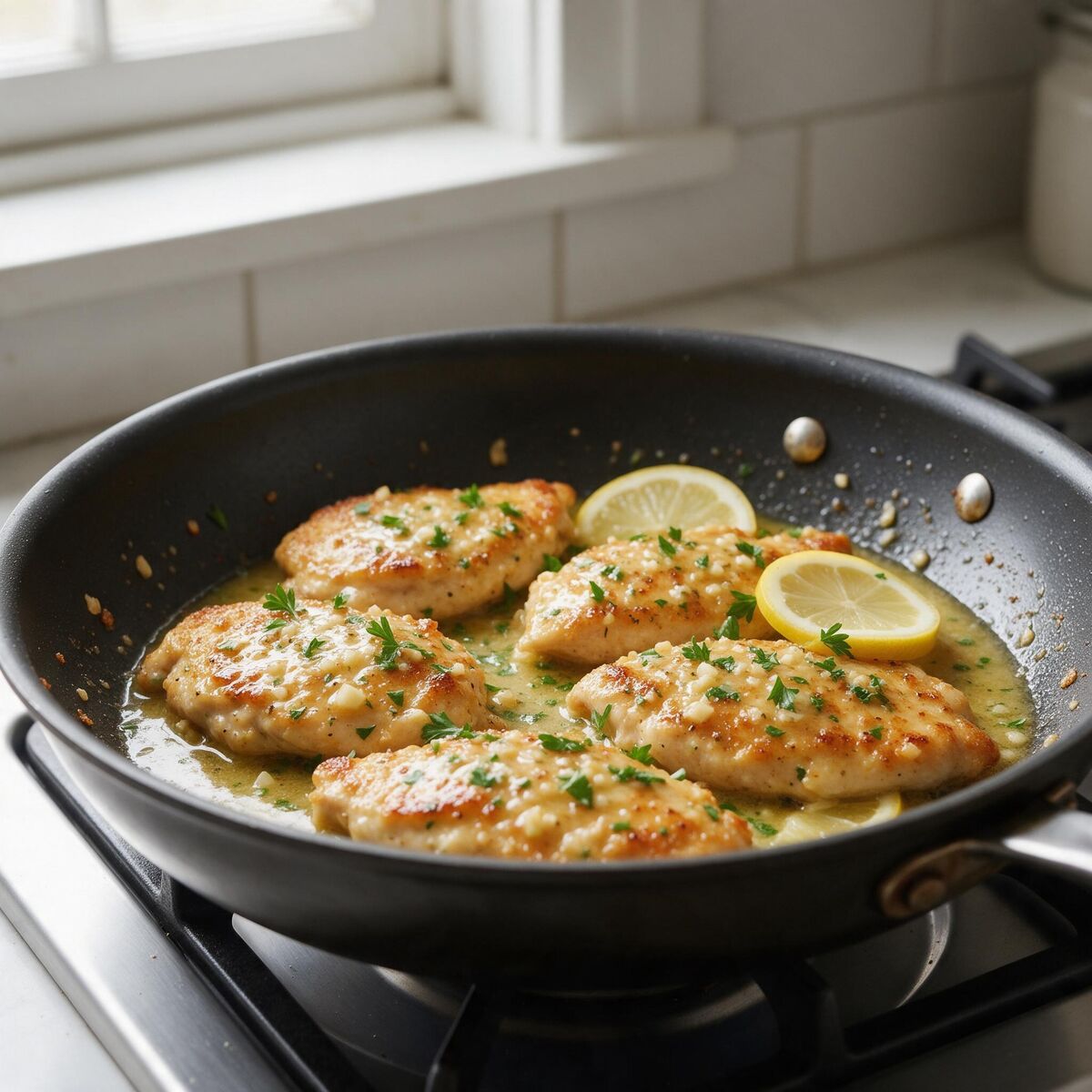
There is a particular kind of Tuesday when I open the fridge, see a pack of chicken breasts and half a lemon rolling around the crisper, and know exactly what dinner is going to be. This lemon chicken skillet is the meal I make when I’m tired but still want something that tastes like I tried. It comes together in one pan, the sauce builds itself out of the browned bits the chicken leaves behind, and the whole thing is on the table in under twenty minutes.
The reason it works so well on a busy night is the cutlet. A whole chicken breast is thick at one end and thin at the other, so it either takes forever or dries out at the edges. Slicing it horizontally into two thin cutlets, or buying them already cut, means the meat cooks evenly in about eight to ten minutes. That single decision is what turns a slow dinner into a fast one.
About the ingredients
Chicken cutlets. Look for pieces about half an inch thick. If you are starting from whole breasts, lay one flat, press your palm on top, and slice through the middle with a sharp knife. Any uneven bits can be tapped flatter with the bottom of a heavy pan.
Butter and olive oil. The oil handles the high-heat searing because it won’t burn as quickly. The butter goes in later for flavor and to give the sauce a silky finish. For a dairy-free version, skip the butter and use an extra tablespoon of good olive oil, or a plant-based butter that browns well.
Chicken broth. Low-sodium broth lets you control the salt. Vegetable broth works fine, and in a pinch a splash of dry white wine plus water does a very good job too.
Lemon. Use both the zest and the juice. The juice gives sharpness, while the zest carries the fragrant oils that make the dish smell like lemon rather than just taste sour. Zest the lemon before you cut it; it is much harder the other way around.
Garlic and parsley. Fresh garlic is worth the thirty seconds of mincing. Parsley adds color and a grassy freshness, but chives, dill, or basil are all lovely substitutes.
How to make it, step by step
Dry and season. Pat the cutlets dry with a paper towel. Moisture on the surface steams instead of browns, and browning is where most of the flavor in this dish comes from. Season both sides generously with salt and pepper.
Get the pan properly hot. Use a heavy skillet, ideally stainless steel or cast iron, over medium-high heat. Add the oil and wait until it shimmers and moves easily around the pan like water. If you drop the chicken in too early it will stick and turn pale.
Sear without fussing. Lay the cutlets away from you and leave them alone for four minutes. You’ll hear a steady sizzle, not a violent spatter. When the underside is deep golden and the chicken releases easily from the pan, flip it. Cook another four to five minutes, until an instant-read thermometer reads 165°F (74°C) in the thickest part. Move the chicken to a plate.
Build the sauce. Turn the heat down to medium-low and let the pan cool for a few seconds. Add the butter and garlic and stir for about thirty seconds, just until the garlic smells sweet and nutty. Pour in the broth, lemon juice, and zest, scraping up the brown bits with a wooden spoon. The sauce will bubble up, turn cloudy and golden, then reduce slightly in a minute or two.
Bring it together. Slide the chicken and any resting juices back into the pan and spoon the sauce over the top. Scatter with parsley and serve straight from the skillet.
Common mistakes to avoid
The most frequent problem is a crowded pan. If your skillet is small, cook the cutlets in two batches; otherwise they release liquid and boil rather than sear. Another one is adding the garlic while the pan is still screaming hot from searing. Garlic burns in seconds and turns bitter, which can ruin an otherwise bright sauce. Finally, resist the urge to add more lemon juice up front. Taste the sauce at the end and add extra lemon then, because acidity is easier to build than to take away.
Variations
- Gluten-free: The recipe is naturally gluten-free as written; just check that your broth is labeled gluten-free.
- Dairy-free: Replace the butter with olive oil or a dairy-free butter, and finish with a little extra zest for richness of flavor.
- Lemon caper: Stir a tablespoon of rinsed capers into the sauce for a piccata-style twist.
- Creamy lemon: Add two tablespoons of cream or crème fraîche after the broth reduces for a softer, rounder sauce.
- Vegetarian: Thick slices of halloumi or firm tofu, seared until crisp, take beautifully to the same lemon-garlic sauce. Use vegetable broth.
What to serve with it
Because the sauce is the star, serve something that can soak it up. Crusty bread, buttered orzo, or quick couscous are all ready in about the time the chicken takes. For something lighter, a pile of arugula dressed with olive oil and a pinch of salt, steamed green beans, or garlicky sautéed spinach keep the meal fresh. If you have leftover rice, warm it through and spoon the sauce right over the top.
Storage and reheating
Let leftovers cool, then store the chicken and sauce together in an airtight container in the fridge for up to three days. To reheat, warm gently in a covered skillet over low heat with a splash of water or broth, turning the chicken once, until hot all the way through. The microwave works too, but use half power so the edges don’t toughen. Cold leftover cutlets are also excellent sliced into a sandwich with mayonnaise and lettuce the next day.
Recipe card
Ingredients
- 2 thin chicken breast cutlets (about 12 oz total)
- 1 tbsp olive oil
- 1 tbsp butter
- 2 garlic cloves, minced
- 1/3 cup low-sodium chicken broth
- 2 tbsp lemon juice
- 1 tsp lemon zest
- Salt, pepper, and parsley
Instructions
- 1
Season thin chicken cutlets with salt and pepper.
- 2
Heat oil in a skillet over medium-high heat. Cook chicken 4–5 minutes per side until 165°F (74°C), then move to a plate.
- 3
Reduce heat; add butter and garlic for 30 seconds. Pour in broth, lemon juice, and zest. Simmer 1–2 minutes.
- 4
Return chicken briefly to coat with sauce. Sprinkle with parsley.
Helpful tips
- Pound cutlets to an even thickness before cooking.
Frequently asked questions
Can I use chicken thighs instead of breasts?
Yes. Boneless, skinless thighs are more forgiving and stay juicy. Flatten them slightly and cook for five to six minutes per side, until they reach 165°F (74°C).
How do I keep the chicken from drying out?
Keep the cutlets an even thickness, avoid overcooking, and pull them as soon as they reach temperature. A quick-read thermometer takes the guesswork out of it.
Can I make this without broth?
You can use water with a pinch of salt or a splash of dry white wine. The sauce will be a little lighter but still very good thanks to the browned bits in the pan.
Is it okay to use bottled lemon juice?
Fresh lemon tastes noticeably brighter, and you need the zest anyway. If bottled is all you have, use a little less and taste before adding more.
Can I double the recipe?
Absolutely. Sear the chicken in batches so the pan stays hot, then double the sauce ingredients and give it an extra minute to reduce.