beef · easy
Korean-Style Ground Beef Rice Bowls
Savory-sweet ground beef with garlic, ginger, and sesame, spooned over rice with quick cucumbers and a fried egg.
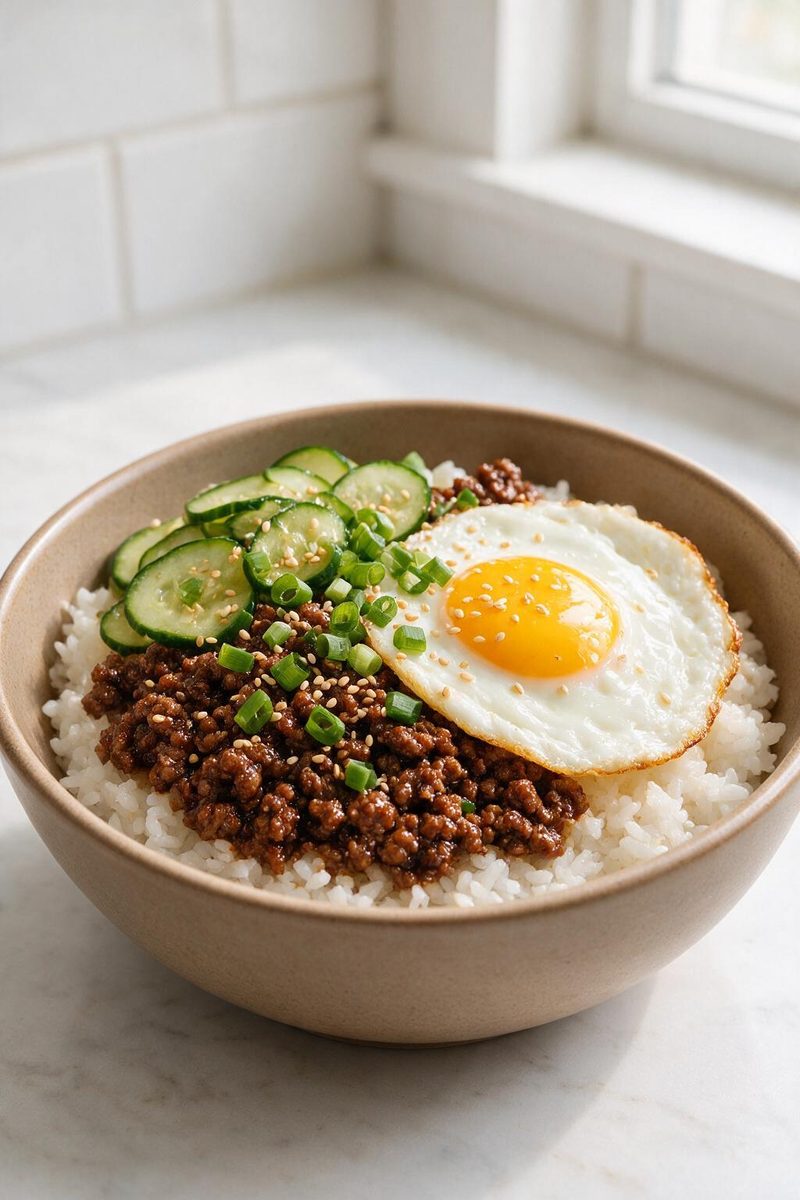
These bowls are inspired by bulgogi, the Korean dish of thinly sliced beef in a sweet soy and garlic marinade. Real bulgogi needs time to marinate and thinly sliced ribeye, which I rarely have on a Tuesday. Ground beef, on the other hand, I almost always have, and it soaks up the same sweet-salty flavors in about two minutes. It’s become one of the most requested dinners in my house, especially with a crispy fried egg on top.
This is perfect for busy nights because ground beef browns fast, needs no slicing, and the sauce uses pantry staples. While the beef cooks, the cucumbers quick-pickle in a little vinegar. The whole thing comes together in about fifteen minutes.
Ingredient notes
Ground beef. Lean ground beef (around 90%) has just enough fat for flavor without being greasy. Ground turkey, chicken, or pork work equally well.
Garlic and ginger. Fresh is best and gives the dish its signature punch. Use a microplane to grate the ginger quickly.
Soy sauce and brown sugar. The backbone of the sauce: salty and sweet in balance. Honey can replace the sugar. Use tamari for gluten-free.
Sesame oil. Toasted sesame oil has a rich, nutty flavor. Add it with the sauce rather than for cooking, as high heat dulls its aroma.
Gochujang. This Korean fermented chili paste adds depth, gentle heat, and a little sweetness. If you don’t have it, sriracha is a fine substitute, or leave it out for kids.
Quick cucumbers. Thin slices of cucumber with rice vinegar and salt provide a crisp, tangy contrast to the rich beef.
Step by step
Pickle the cucumbers. Toss the sliced cucumber with rice vinegar and a pinch of salt in a small bowl. Set aside; they’ll soften slightly and become tangy while you cook.
Brown the beef. Heat a large skillet over medium-high heat. Add the beef and press it flat. Let it brown undisturbed for a minute or two, then break it into crumbles and keep cooking for five to six minutes until well browned. Those crispy bits add great texture. Tilt the pan and spoon off excess fat if there’s a lot.
Add aromatics. Stir in the garlic and ginger and cook for about thirty seconds, until the smell hits you.
Sauce it. Add the soy sauce, brown sugar, sesame oil, and gochujang. Stir and simmer for about two minutes, until the sauce bubbles, reduces, and turns glossy, clinging to the beef.
Assemble. Divide hot rice among bowls, spoon over the beef, and add the pickled cucumbers. Sprinkle with green onions and sesame seeds. A fried egg on top is highly recommended.
Common mistakes
Constantly stirring the beef prevents it from browning, leaving it gray and steamed. Let it sit. Not draining excess fat can make the sauce greasy. Adding the sugar too early may cause it to burn, so add the sauce only once the beef is fully cooked. And taste before adding more soy sauce, since it’s easy to oversalt.
Variations
- Gluten-free: Use tamari and check that your gochujang is gluten-free (many contain wheat).
- Dairy-free: Naturally dairy-free.
- Vegetarian: Use crumbled extra-firm tofu or plant-based mince, cooking until browned before adding the sauce.
- Lettuce wraps: Spoon the beef into lettuce cups instead of serving over rice.
- Add vegetables: Stir-fry shredded carrots, spinach, or mushrooms with the beef.
Build-your-own bowl ideas
These bowls are a fantastic way to use up bits and pieces in the fridge. Try adding kimchi for tang and spice, shredded carrots, blanched spinach seasoned with sesame oil, sliced radishes, avocado, or steamed broccoli. A drizzle of spicy mayo (mayonnaise mixed with sriracha or gochujang) is a popular finishing touch. Think of it as a template rather than a strict recipe.
What to serve with it
Steamed short-grain rice is traditional and slightly sticky, perfect for scooping up beef and sauce. Kimchi, sautéed spinach with garlic, and steamed edamame are great sides. A light miso or seaweed soup rounds out the meal.
Storage and reheating
Store the cooked beef in an airtight container in the fridge for up to four days or freeze for up to three months. Keep the cucumbers separate; they’ll keep for two to three days. Reheat the beef in a skillet or microwave until hot throughout, adding a splash of water if it seems dry. These bowls are excellent for meal prep.
Recipe card
Ingredients
- 1 lb lean ground beef
- 3 garlic cloves, minced
- 1 tbsp grated ginger
- 3 tbsp soy sauce
- 2 tbsp brown sugar
- 1 tbsp toasted sesame oil
- 1 tsp gochujang or sriracha (optional)
- 1 cucumber, thinly sliced
- 1 tbsp rice vinegar
- 3 green onions, sliced
- 3 cups hot cooked rice
- Toasted sesame seeds
Instructions
- 1
Toss cucumber with rice vinegar and a pinch of salt; set aside.
- 2
Cook beef in a large skillet over medium-high heat 5–6 minutes, breaking it up, until browned and no longer pink (160°F/71°C). Drain excess fat.
- 3
Add garlic and ginger and cook 30 seconds.
- 4
Stir in soy sauce, brown sugar, sesame oil, and gochujang. Simmer 2 minutes until the sauce coats the beef.
- 5
Serve over rice with cucumbers, green onions, and sesame seeds.
Helpful tips
- Top each bowl with a fried egg for extra richness.
- Let the beef sit undisturbed for a minute or two so it gets crispy bits.
Frequently asked questions
What is gochujang?
It's a Korean fermented chili paste that's savory, sweet, and spicy. Find it in Asian grocery stores or the international aisle of many supermarkets.
Can I make this less sweet?
Yes. Reduce the brown sugar to 1 tablespoon and add a squeeze of lime for balance.
Is this the same as bulgogi?
It's inspired by bulgogi's flavors, but traditional bulgogi uses thinly sliced marinated beef that's grilled or pan-fried.
Can I meal prep these bowls?
Absolutely. Portion the beef and rice into containers, and keep the cucumbers and toppings separate until serving.
What rice should I use?
Short-grain or medium-grain rice is traditional, but jasmine, basmati, brown rice, or cauliflower rice all work.