seafood · easy
Honey Garlic Salmon Bites
Golden salmon cubes coated in a sticky honey-soy garlic glaze.
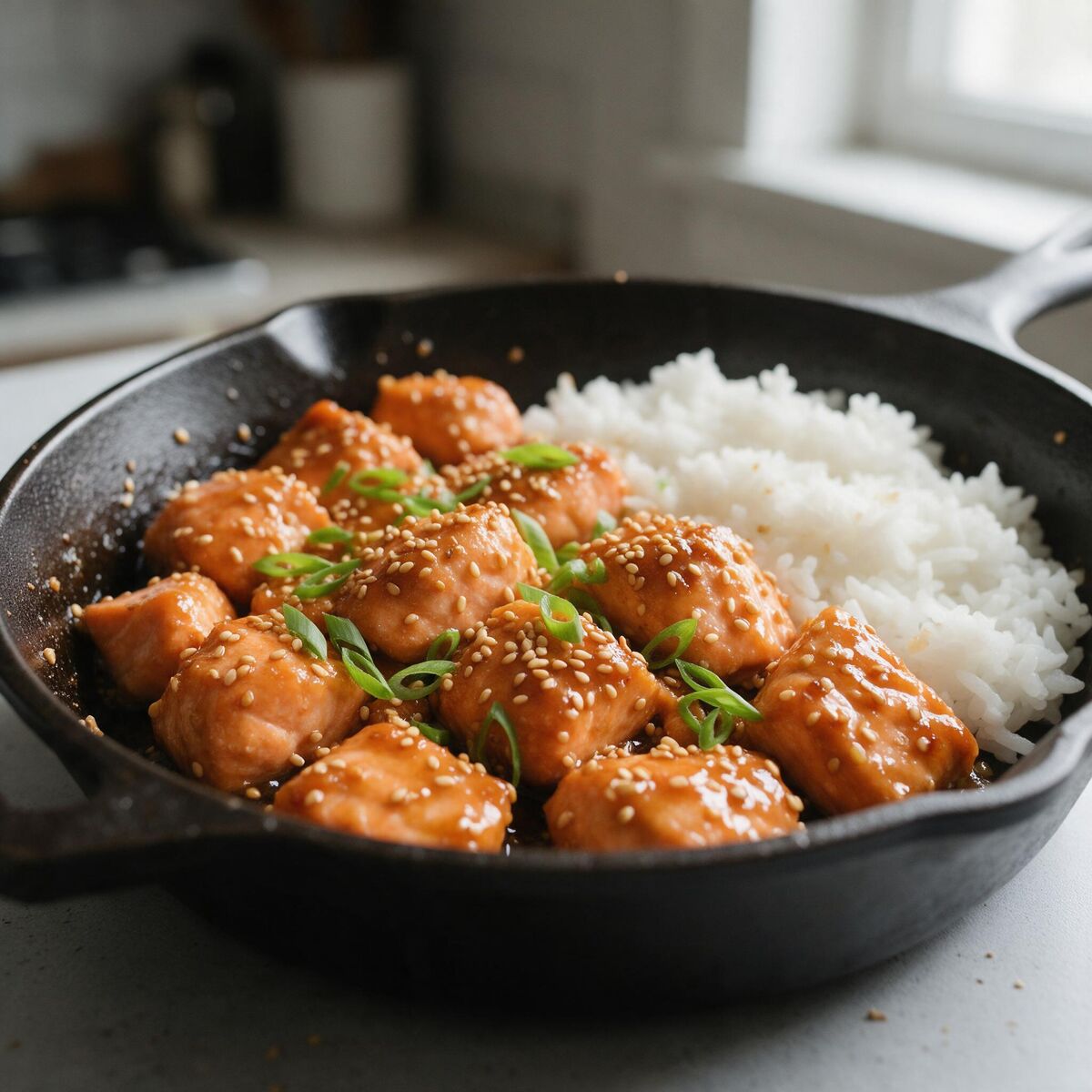
Salmon fillets can feel a little serious for a Wednesday night, but cutting them into bite-sized cubes changes everything. They cook in about six minutes, get caramelized on several sides instead of just one, and soak up a sticky honey-garlic glaze like little sweets. My partner, who claims not to like fish, will happily eat a bowl of these over rice. That alone earns this recipe a regular spot.
It suits busy nights because the sauce is whisked together in a bowl before you even turn on the stove. Once the salmon hits the pan, you have about eight minutes until dinner, and the only cleanup is one skillet and a small bowl.
Ingredient notes
Salmon. Skinless fillets are easiest to cube. Aim for pieces around one inch so they cook evenly. Frozen salmon works if thawed overnight in the fridge and patted dry. Arctic char or trout are good alternatives with similar texture.
Honey. It creates the sticky glaze and balances the salty soy sauce. Maple syrup works for a slightly different, earthier sweetness. Brown sugar will also do in a pinch.
Soy sauce. Regular or low-sodium both work. Use tamari to keep the dish gluten-free.
Garlic. Fresh is best here; jarred garlic can taste harsh in such a simple sauce.
Lemon juice. Just a teaspoon to cut through the sweetness. Lime or rice vinegar works too.
Cornstarch slurry. This is what turns the thin sauce into a glossy glaze in under a minute. Arrowroot or potato starch are fine substitutes.
Making it, step by step
Mix the sauce. In a small bowl, whisk the honey, soy sauce, garlic, lemon juice, and cornstarch slurry until smooth. Set it right next to the stove so it’s ready the moment you need it.
Sear the salmon. Heat the oil in a nonstick skillet over medium-high heat. When the oil shimmers, add the salmon cubes in a single layer, leaving a bit of space between them. Let them cook undisturbed for three to four minutes, until the bottoms are golden and release easily.
Turn and finish. Gently turn each piece with tongs or a spatula. Cook for two to three minutes more. The salmon is ready when it flakes easily and reaches 145°F (63°C), or when the center has just turned from translucent to opaque.
Glaze. Give the sauce a quick stir, as the cornstarch settles, then pour it into the pan. It will bubble immediately and thicken within a minute. Gently toss the salmon until every piece is shiny and coated. Sprinkle with green onions and serve right away.
A note on choosing salmon
At the fish counter, look for flesh that is moist and evenly colored, with no dry or brown edges, and a clean smell of the sea rather than anything fishy. Center-cut pieces are thicker and more uniform, which makes neat cubes that cook at the same rate. Thin tail pieces are cheaper and perfectly fine, but they cook faster, so cut them a little larger. Farmed Atlantic salmon is rich and forgiving; wild sockeye or coho is leaner and deeper red, and benefits from pulling it a minute earlier so it stays moist. Either way, this sticky glaze flatters it.
Common mistakes
Moving the salmon too early tears the delicate flesh and prevents browning; wait until it releases on its own. Adding the sauce before the fish is cooked can cause the honey to burn, since sugars scorch quickly. Using too high heat once the sauce goes in is another culprit — lower it slightly if the glaze darkens fast. Lastly, stirring too vigorously can break the cubes apart, so toss gently.
Variations
- Gluten-free: Use tamari or coconut aminos instead of soy sauce.
- Dairy-free: Naturally dairy-free as written.
- Spicy: Add sriracha or a pinch of chili flakes to the sauce.
- Vegetarian: Use extra-firm tofu, pressed and cubed. Toss it in a little cornstarch first so it crisps nicely.
- Sesame-ginger: Add a teaspoon of grated ginger and a drizzle of toasted sesame oil, then finish with sesame seeds.
Serving suggestions
Steamed jasmine rice is the easiest partner, catching every bit of extra glaze. Quick-cooking noodles tossed with a little sesame oil are great too. For vegetables, try steamed broccoli, sautéed green beans, garlicky bok choy, or a crunchy cucumber salad. To make a bowl, layer rice, salmon, sliced avocado, shredded carrot, and edamame.
Storage and reheating
Store leftovers in the fridge in an airtight container for up to two days. Reheat gently, preferably covered in a low oven or a skillet over low heat, just until warmed through. High heat or a long time in the microwave will dry out the fish. Leftover salmon is also delicious cold over salad or flaked into fried rice the next day.
Recipe card
Ingredients
- 12 oz skinless salmon, cut into 1-inch cubes
- 1 tbsp neutral oil
- 2 tbsp honey
- 1 tbsp soy sauce
- 2 garlic cloves, minced
- 1 tsp lemon juice
- 1 tsp cornstarch mixed with 1 tbsp water
- Sliced green onion
Instructions
- 1
Whisk honey, soy sauce, garlic, lemon juice, and cornstarch slurry in a bowl.
- 2
Heat oil in a nonstick skillet over medium-high heat. Add salmon cubes in one layer.
- 3
Cook 3–4 minutes, turn, and cook 2–3 minutes more until the fish reaches 145°F (63°C).
- 4
Pour in sauce and toss 1–2 minutes until glossy. Sprinkle with green onion.
Helpful tips
- Pat salmon dry for better browning.
Frequently asked questions
Can I use salmon with the skin on?
It's easier with skinless, but you can remove the skin yourself using a sharp knife. Crispy salmon skin can also be cooked separately as a snack.
How can I tell salmon is done without a thermometer?
Press a piece gently with a fork. It should flake easily and look opaque all the way through, with no glassy center.
Can I bake this instead?
Yes. Bake the cubes at 400°F (200°C) for about 8 to 10 minutes, then toss with the sauce simmered separately on the stove until thick.
What can I use instead of honey?
Maple syrup, agave, or brown sugar all work. Each gives a slightly different flavor but the same sticky finish.
Is this recipe kid-friendly?
Very. The sauce is sweet and mild, and the bite-sized pieces are easy for kids to eat.