rice · easy
Chorizo and Pepper Rice Skillet
Smoky Spanish chorizo, sweet peppers, and peas fried with cooked rice and paprika for a fast, paella-inspired supper.
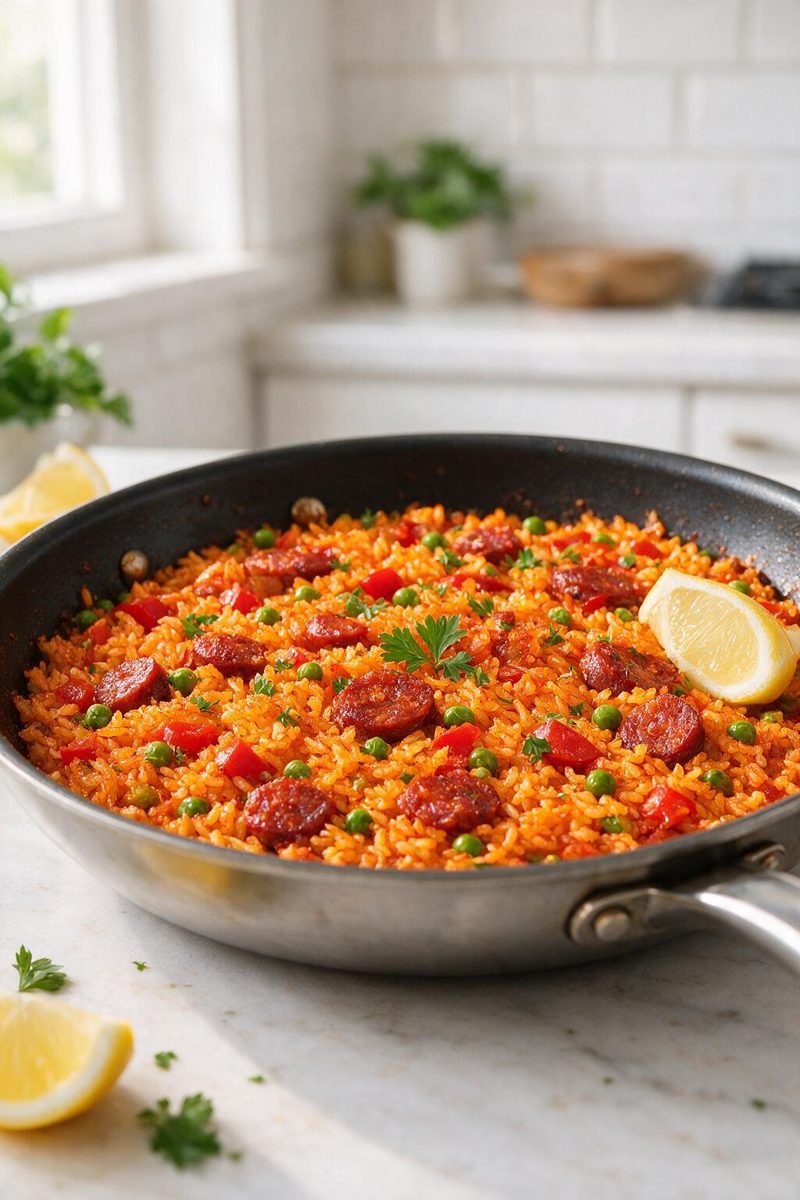
I love paella, but I rarely have the time for it during the week. This chorizo rice skillet is my shortcut version: it takes the smoky, paprika-rich flavors of Spanish rice dishes and squeezes them into a quick, one-pan dinner using leftover rice. The chorizo does most of the work, releasing a glorious red, spiced oil that coats every grain.
On a busy night it’s ideal because cured chorizo needs no cooking through, and precooked rice means you’re just heating and crisping. You’ll have a vibrant, deeply flavored dinner on the table in under twenty minutes, with only one pan to clean.
About the ingredients
Spanish chorizo. Use cured, firm chorizo, the kind sold whole or sliced like salami. It’s packed with smoked paprika and garlic. Mexican chorizo is raw and crumbly, and behaves differently; if using it, cook it through until no pink remains. Smoked sausage or kielbasa can also stand in.
Rice. Cooked rice that’s been chilled works best, as the grains stay separate. Microwave rice pouches are handy. Short-grain or medium-grain rice gives a slightly stickier, more paella-like texture.
Onion and pepper. They add sweetness and color. Use any color pepper, or swap in diced zucchini.
Smoked paprika. It intensifies the smoky flavor of the chorizo. Sweet paprika works but is milder.
Peas. They add pops of color and sweetness. Frozen green beans or artichoke hearts are lovely alternatives.
Broth and lemon. A little broth helps the rice absorb flavor; lemon at the end brightens everything.
Step by step
Render the chorizo. Heat the olive oil in a large skillet over medium heat. Add the chorizo and cook for two to three minutes, stirring occasionally. As it heats, it will release bright orange oil and the edges will turn crisp. The kitchen will smell smoky and garlicky.
Soften the vegetables. Add the onion and pepper and cook, stirring often, for about four minutes until softened and lightly browned. Stir in the garlic and smoked paprika and cook for thirty seconds until fragrant.
Add the rice. Tip in the rice and peas. Break up any clumps and stir so every grain is coated in the red oil. Pour in the broth; it will sizzle and steam.
Crisp the bottom. Cook for four to five minutes, stirring occasionally at first, then pressing the rice into an even layer and leaving it alone for the last two minutes. This creates a golden, slightly crispy base, a nod to the prized socarrat of paella. You’ll hear a gentle crackling when it’s forming.
Finish. Taste and add salt if needed; chorizo is often quite salty already. Sprinkle with parsley and serve with lemon wedges.
Common mistakes
Cooking the chorizo over too high heat can burn the paprika in it and make the oil bitter. Medium heat is plenty. Using freshly cooked, warm rice can result in a mushy texture; chilled rice is better. Overstirring at the end prevents a crispy base from forming. And don’t over-salt — taste first, as chorizo and broth contribute plenty.
Variations
- Gluten-free: Use certified gluten-free chorizo and broth.
- Dairy-free: Naturally dairy-free.
- Vegetarian: Use plant-based chorizo or smoked tofu, plus an extra teaspoon of smoked paprika.
- Seafood: Add a handful of raw shrimp with the rice and cook until pink, about three to four minutes.
- Chicken: Stir in leftover shredded chicken with the rice for extra protein.
The secret of the crispy bottom
In Spain, the caramelized layer of rice at the bottom of the paella pan is called socarrat, and many people consider it the best part. You can get a similar effect in a regular skillet. Once everything is heated through, press the rice into an even layer with the back of a spatula and turn the heat up slightly. Leave it completely alone for two minutes. Listen for a gentle crackle and catch a toasty smell, then take it off the heat. Scrape up the crispy bits and fold them through as you serve.
What to serve with it
A crisp green salad with sherry vinegar dressing is perfect. A simple tomato salad with olive oil and salt, or garlicky sautéed spinach, adds freshness. For a heartier meal, top each portion with a fried egg; the runny yolk makes a delicious sauce.
Storage and reheating
Cool leftovers quickly and refrigerate in an airtight container for up to three days. Reheat in a skillet with a splash of water or broth, stirring until steaming hot all the way through. You can also microwave it covered, stirring halfway. Rice should only be reheated once.
Recipe card
Ingredients
- 5 oz cured Spanish chorizo, diced
- 1 tbsp olive oil
- 1 small onion, diced
- 1 red bell pepper, diced
- 2 garlic cloves, minced
- 1 tsp smoked paprika
- 3 cups cooked rice, preferably chilled
- 1/2 cup frozen peas
- 1/3 cup chicken or vegetable broth
- 1 lemon, cut into wedges
- 2 tbsp chopped parsley
- Salt to taste
Instructions
- 1
Warm oil in a large skillet over medium heat. Add chorizo and cook 2–3 minutes until it releases its red oil and crisps at the edges.
- 2
Add onion and pepper; cook 4 minutes until softened. Stir in garlic and paprika for 30 seconds.
- 3
Add rice and peas; stir to coat in the oil. Pour in broth and cook 4–5 minutes, stirring occasionally, until hot and lightly crisp on the bottom.
- 4
Season, sprinkle with parsley, and serve with lemon wedges.
Helpful tips
- Let the rice sit undisturbed for the last 2 minutes for a crispy base.
- Cured chorizo is ready to eat; you're just crisping it.
Frequently asked questions
Can I use Mexican chorizo?
Yes, but it's raw, so cook it fully until browned and no pink remains before adding the vegetables. Drain excess fat if needed.
Do I have to use leftover rice?
Chilled rice works best, but freshly cooked rice spread on a tray to cool for 10 minutes also works.
Is this dish spicy?
It depends on the chorizo. Picante chorizo is spicy; dulce is mild. Choose based on your preference.
Can I add saffron?
Yes. Crumble a pinch of saffron threads into the warm broth before adding it for a more paella-like aroma and golden color.
What other vegetables work?
Zucchini, green beans, artichoke hearts, and cherry tomatoes are all great additions.